
U.S. Marshals Release Paths
The U.S. Marshals Service is responsible for the confinement, care, and transportation of federal prisoners from court-ordered custody until acquittal or conviction and delivery to the Bureau of Prisons. It contracts with state and local governments for jail space, and many Marshals prisoners are held outside a building owned by USMS. Physical presence in a county jail therefore does not make the person a county detainee.
A pretrial release may follow a federal court order. A convicted person may be remanded and later designated to BOP. An acquittal can end the Marshals custody basis, while a detainer or other case can lead to another handoff. Read the court order, custody agency, and destination together. Absence from Fulton current-inmate data cannot establish release from federal custody.
Confirm U.S. Marshals Releases
Start with the federal court docket for the case. A docket is the court’s chronological list of filings and orders. Look for the detention decision, release order, bond conditions, remand, judgment, sentence, acquittal, or dismissal. Those entries explain why Marshals custody began or ended more clearly than a local jail roster.
- Identify the federal case and defendant.
- Review the latest detention or release order.
- Check whether the person was remanded or designated.
- Search BOP after a sentenced-inmate handoff.
- Follow a named ICE or other-agency transfer separately.
For a person delivered to BOP, use the BOP Inmate Locator. BOP says a past release date with no facility means the person is no longer in BOP custody, though another form of custody or supervision may continue. A person still in the federal pretrial phase may not have a useful BOP result because USMS can house prisoners in many local or contract facilities.
Federal Court Release Records
The court file is central because the Marshals Service acts on court-ordered custody. A release order can impose conditions, while remand sends the defendant into federal detention. A judgment and sentence may lead to BOP custody. These are legal events, not merely changes in a jail database. Confirm the person and case number before relying on any docket entry.
If a Fulton County booking also exists, treat the county and federal records as separate stages. A local release type of transfer to another agency can document that Fulton custody ended, but it does not certify release into the community. The federal docket or later federal locator must complete the chain.
U.S. Marshals Records Requests
The supplied research identifies official USMS custody-and-detention pages but does not provide a local Fulton address, phone number, public counter, or stated hours for release inquiries. None should be invented. Use the federal case, official Marshals prisoner information, and BOP source as applicable. A records request should identify the person, federal case, known identifier, approximate custody dates, and the narrow public fact being sought.
Georgia county open-records law does not govern federal Marshals records merely because detention occurred in Fulton County. The successful image assigned in the manifest concerns Georgia Open Records Act production and fees, which can assist only with an existing Georgia state or local record tied to a local handoff. It does not turn a federal record into a state record.
U.S. Marshals Federal Custody
Agency: U.S. Marshals Service
Local address: Not established in the supplied research
Local phone or hours: Not established in the supplied research
Fulton Handoff Record Requests
If the question concerns an existing Fulton or Georgia record of the handoff, O.C.G.A. Section 50-18-71 explains production timing and fees. The Georgia provision shown below is the successful page image assigned to this facility page.
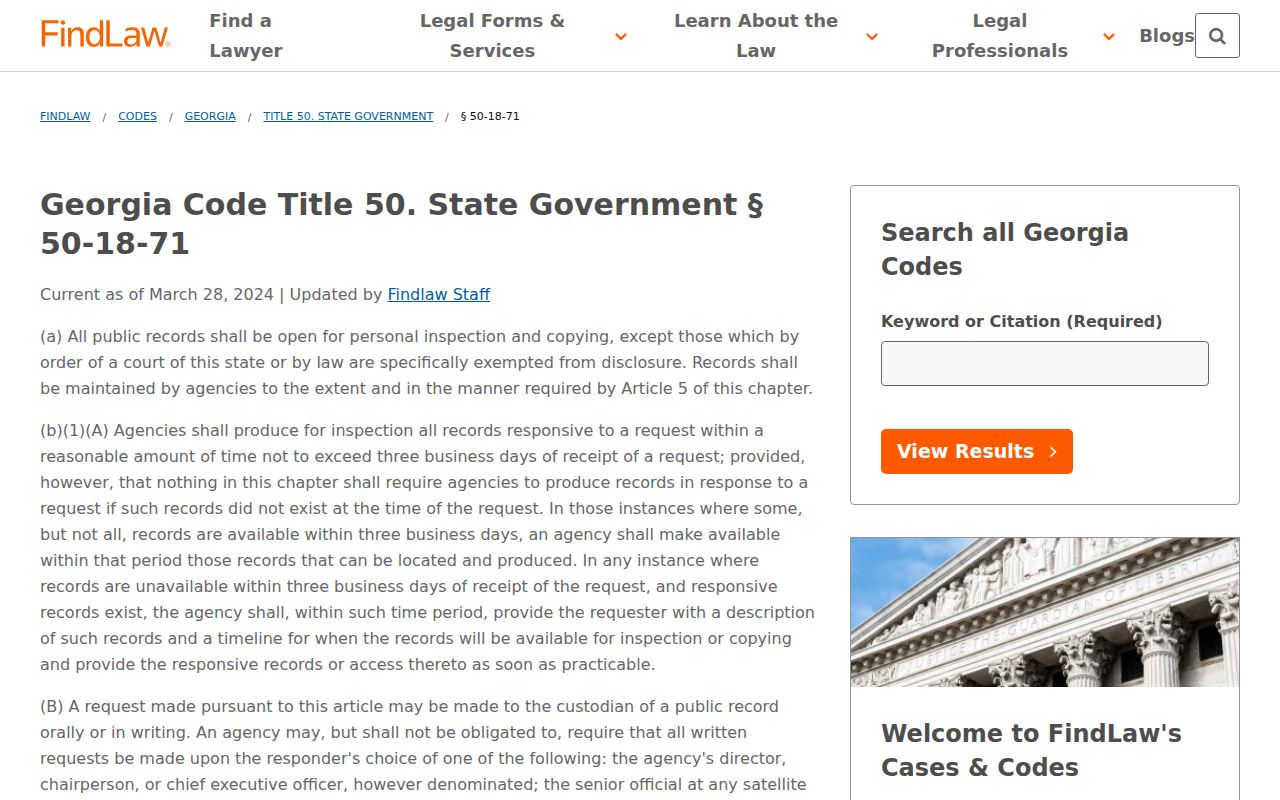
Ask the local agency for an existing public booking, release, or transfer record. Georgia law does not require an agency to create a federal-release certificate that does not exist. For the complete county search sequence, the Fulton County release records guide explains how a transfer entry differs from community release.
U.S. Marshals Detainers
A detainer is a request or notice that another authority seeks continued custody or transfer. It can explain why a person leaves one institution but does not return to the community. USMS may transport a prisoner between a contract jail, federal hearing, medical setting, and BOP destination. ICE or another jurisdiction can add a separate custody basis.
Follow only a documented handoff. Use BOP for sentenced federal inmates, ICE ODLS for immigration detention, and the federal docket for pretrial detention or release. Do not infer ICE involvement from nationality, name, or an unexplained absence from a roster.
Fulton Federal Custody Context
Fulton County contains several detention systems. The sheriff operates county jail locations, GDC operates state facilities, BOP operates FCI Atlanta, and USMS can place federal prisoners in varied facilities. The Department of Justice report identifying Fulton’s main jail and annexes helps map local sites, but it does not define legal custody for a Marshals prisoner.
The best conclusion is specific: released from Fulton custody, released by federal court subject to conditions, delivered to BOP, no longer in BOP custody, or transferred to a named agency. Those phrases preserve the difference between a building move and an actual end to custody. Records from two systems should agree before a broader conclusion is drawn.
Marshals Release Record Meaning
A federal release finding should name its scope. A court may release a defendant on conditions while the criminal case stays open. USMS may deliver a sentenced prisoner to BOP, ending the Marshals stage without ending confinement. Another authority may accept a transfer. Each event is real, but none should be mislabeled as an unconditional return to the community.
Save the case number, order date, and agency identifier used in the check. Compare names with another identifying fact. If a BOP record later appears, use its status and release rule for that stage. This chain is more reliable than searching each Fulton detention address for a federal prisoner whose housing may change.