
Out-of-County Release Destinations
Share Fulton Jail Bookings uses Out of County as a location. That entry means the person was tied to a Fulton booking while physically housed beyond the ordinary Fulton jail locations. It does not name one fixed building. The operating arrangement involves the Fulton County Sheriff's Office and outside counties, so the correct contact can depend on the booking and transfer details.
When the dataset shows a release date, read its release type. Bond, probation, time served, and a court-directed outcome may point toward release to the community. Transfer to another agency means Fulton custody ended while custody elsewhere may have begun or continued. Extradition, transfer to GDC, a program move, and a federal handoff each require a different follow-up. Never turn the location value into a claim that the person is free.
Confirm a Contract-Bed Release
Begin in the official Fulton systems. Check the sheriff inmate search for an active Fulton record, then search the open booking dataset for the matching booking number. The sheriff database is updated once a day, and the open dataset can lag, so same-day conflicts are possible. Compare name, booking date, booking number, charge, location, release date, and release type.
- Identify the exact Fulton booking, not just a matching name.
- Confirm that its location is recorded as Out of County.
- Read the release date with the release type and any destination context.
- Search the receiving county, GDC, BOP, or ICE system if the entry indicates a handoff.
- Check the court docket or request public FCSO records when no destination is shown.
The county-wide Fulton release-record guide covers the full booking field inventory. A live roster answers current custody in that roster's system. A completed booking row answers what Fulton recorded about a past phase.
Read Fulton Transfer Fields
Out-of-county searches turn on a small group of fields. Each adds context, but none should be read in isolation.
| Field | Use |
|---|---|
| BookingNumber | Links the result to one Fulton custody episode. |
| Location | Shows Out of County when Fulton used an external placement. |
| ReleaseDate | Marks the end date Fulton recorded for that booking phase. |
| ReleaseType | Separates a bond or time-served result from a transfer. |
| DeliveryAgency | Can identify the agency connected to the booking. |
The official out-of-county release view illustrates the individual booking results.
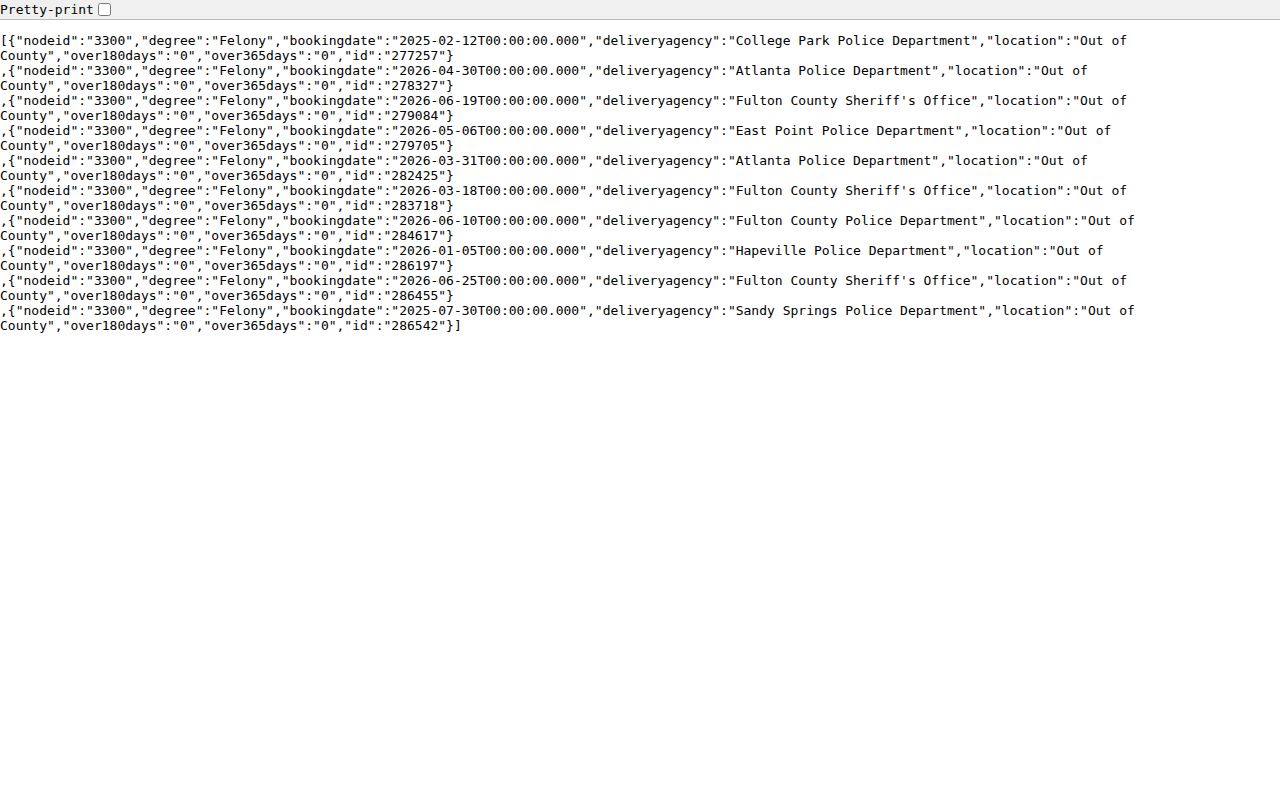
The displayed release rows are starting points; the type and receiving system determine whether custody truly ended.
The county also exposes grouped release types for this location through its official grouped-data view.
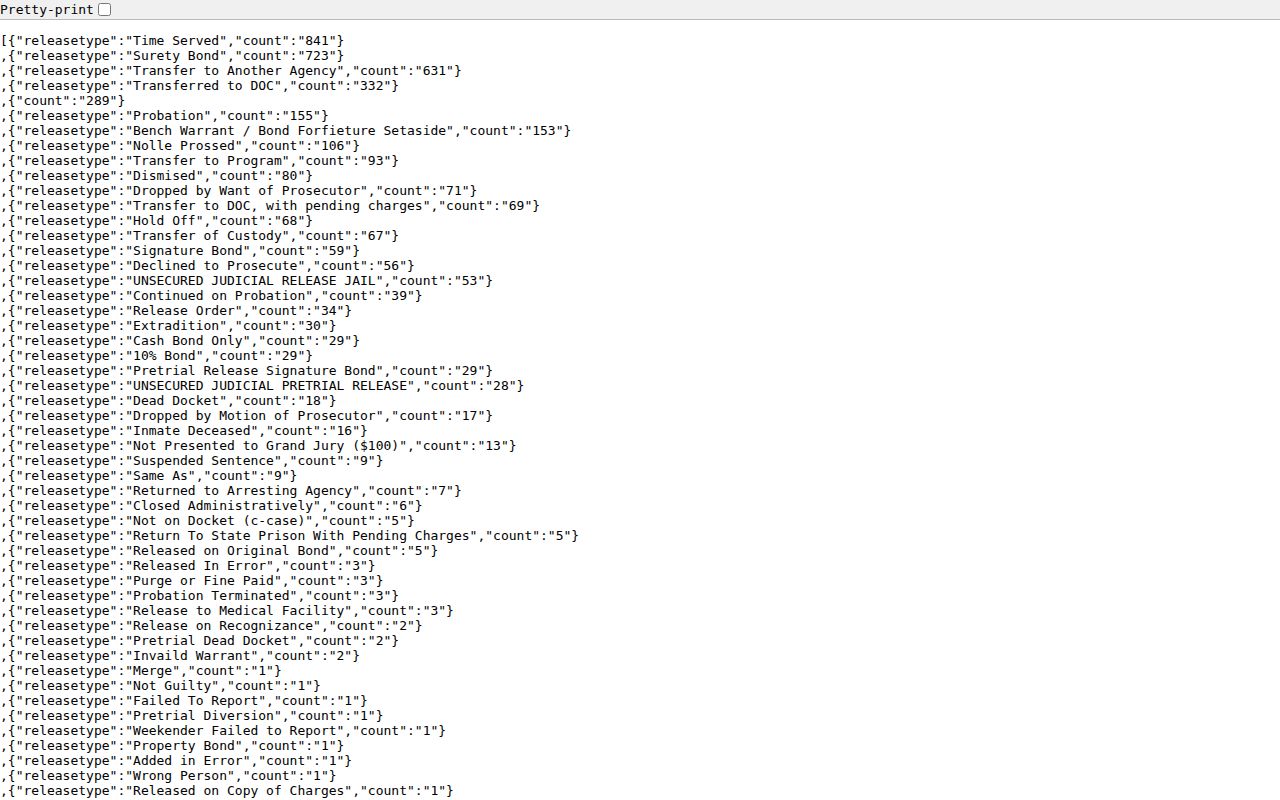
That view shows why one location label can lead to several outcomes rather than one uniform release path.
Request Contract-Bed Records
If the destination is absent, request existing public records from FCSO. Give the person's full name, date of birth if known, booking number, approximate dates, and the Out of County location value. Ask for public booking and release fields, release time and type, the facility released from, and a transfer destination if it is public. A focused request reduces false matches and avoids asking for protected medical, juvenile, sealed, or investigatory material.
Georgia's Open Records Act, O.C.G.A. Section 50-18-70 et seq., supplies the request framework. Section 50-18-71 generally requires production within a reasonable time not exceeding three business days for existing, available public records, or a description and timeline when more time is needed. Agencies do not have to create a new record. Search, retrieval, redaction, and copying fees may apply.
Fulton County Sheriff's Office
185 Shirley C. Franklin Blvd. SW
Atlanta, GA 30303
404-612-5100
Fulton Contract-Bed Mapping
Fulton's custody map includes the main jail, annexes, Atlanta City Detention Center, and external placements. DOJ identifies the main jail plus the South Fulton, Alpharetta, and Marietta annexes. The county dataset adds Out of County as another operational location value. Absence from Rice Street therefore proves little by itself.
Reconcile the facility label with the current-inmate snapshot and the full booking record. If an outside county is named, use that county's official custody source. If it is not named, FCSO is the best starting office because Fulton created the booking entry. This mapping step prevents a transfer between facilities from being mistaken for a release.
Federal Transfers After Fulton Release
Federal and immigration handoffs have separate systems. Use GDC Find an Offender for a transfer into Georgia state corrections. Use the BOP Inmate Locator for a sentenced federal inmate. BOP explains that a past release date with no facility means the person is no longer in BOP custody, though supervision or another custody system may still apply. ICE detainees are searched through the ICE Online Detainee Locator System.
ICE publishes a contact for detainees at FCI Atlanta. Callers should have the alien registration number and country of birth, or biographical details. A U.S. Marshals prisoner may also be housed in a local or contract facility while legally in federal custody. Federal court orders, Marshals case processing, and later BOP records may supply the right confirmation. Fulton data confirms only the local handoff.
Note: Release from Fulton County can still leave a person in state, federal, immigration, or another county's custody.
Contract-Bed Release Court Records
A court docket can show whether the event followed bond, dismissal, sentencing, remand, or another order. Fulton criminal records are split among Magistrate, State, and Superior systems. Follow the case number and charge to the correct court. Do not assume the first-appearance court holds the final disposition.
Look for bond orders, sentencing entries, probation orders, revocation orders, dismissal entries, and final dispositions. If the record says time served, O.C.G.A. Section 17-10-11 may explain credit for days already confined. If the order remands the person to another authority, that destination becomes the next lookup. Booking data and court data answer different parts of the same question.
VINE may provide another status signal and an alert when a participating agency reports a change. It does not replace a receiving county's official roster or the state and federal locators. For a person known to be on probation or parole after release, DCS is the supervision channel, while the Parole Board handles parole decisions. Keep a brief source log with the date checked, booking number, release type, and receiving agency. That record makes later updates easier to reconcile, especially when one database refreshes before another.
Out-of-County Release Reconciliation
Reconciliation is essential when the public location is Out of County. Confirm that the Fulton booking number is the same one shown in the release row, then compare the release type with the court docket. A bond or time-served entry should have court context. A transfer should have a receiving system, even if the public county row does not name it. Contact FCSO for public destination information before searching nearby counties without a factual lead.
Timing can produce a mismatch. The sheriff inmate database updates once per day, and the public dataset has its own cadence. A receiving jail or prison may create its record after Fulton closes the local booking. Save the time of each check. If the row says transfer while no receiving record appears, ask the sending or receiving records office rather than declaring community release.
Use identifiers that travel with the case. The booking number identifies the local custody episode. The court number identifies the order. A GDC ID or federal register number identifies a later record. VINE can add an alert, but it does not replace the source agency's transfer record. Similar names should never be treated as the same person without more matching details.
Some records will not remain visible. Georgia record restriction and sealing can limit public results, and juvenile, medical, or other protected facts may be withheld. Request only existing public fields. The correct conclusion may be that Fulton custody ended on a recorded date while the next custody status remains unconfirmed.
County, state, and federal systems also use different meanings for a closed record. A Fulton release date ends the county booking phase. A GDC inactive result concerns the state corrections record. A past BOP release date with no facility concerns federal custody. None automatically answers whether another warrant, supervision term, or agency hold exists. Follow only the destination supported by the record.
Court disposition is the final local cross-check when the release reason is unclear. Fulton Magistrate, State, and Superior records are separate. Search the court and case number tied to the charge. A bond order, sentence, dismissal, probation order, or remand entry may explain the release type. Certified copies come from the clerk, not the jail dataset.
If a receiving agency cannot be identified, state the limit. The public Fulton row may support that local custody ended without supporting the person's later location. That careful distinction is more accurate than assuming freedom or continued confinement.