
Fulton Parole Versus Probation
Parole is conditional release from a Georgia prison sentence before the full sentence endpoint. The Georgia State Board of Pardons and Paroles makes the parole decision. The Georgia Department of Community Supervision, called DCS, supervises parolees in the community. Probation comes from a court sentence. DCS supervises felony probation, but misdemeanor probation may be handled by a local, court, government, or private provider. Fulton Magistrate Court Probation Services is therefore not the same office as state felony parole.
| Record type | Who decides | Where to verify |
|---|---|---|
| Parole | State Parole Board | Parolee search, then DCS |
| Felony probation | Sentencing court | Court order and DCS |
| Misdemeanor probation | Sentencing court | Court or named provider |
| Pretrial supervision | Court before disposition | Release order and assigned program |
Fulton booking data may say “Probation” or “Continued on Probation.” That release type points toward a court and supervision check. It does not identify every condition or prove whether the case involved felony or misdemeanor supervision. Read the court disposition with the release entry.
Verify Fulton Post-Release Supervision
Begin with the custody system. If Fulton data says the person transferred to DOC, use GDC first. If a GDC record shows parole, use the Georgia parolee search. If the county release record says probation, locate the sentencing case and read the probation order. That document identifies the type of supervision and often the responsible office.
- Match the person to the booking, GDC ID, or court case.
- Read the release type and sentence disposition.
- Search the Board’s parolee database when parole applies.
- Contact DCS for felony supervision tied to Fulton.
- Use the court or named provider for misdemeanor probation.
The TPM lookup is not the released-person tool. A Tentative Parole Month marks a Board review point and is not a final decision or guaranteed release date. Conduct reports, new information, or unmet program conditions can postpone or cancel it. For someone already released, the parolee database and DCS are the stronger channels.
Fulton Parole Review Records
Georgia does not present ordinary parole review as a Fulton County courtroom calendar. Parole-eligible inmates are generally considered automatically; no application is required. The Board investigates, reviews the file, considers authorized input, votes, and may set a TPM or deny parole. At final review it may set a release date, postpone the TPM, require program completion, or change a decision before release.
Most parole-eligible inmates are eligible after one-third of the prison sentence, but the Board says few receive parole at first eligibility. Serious violent felony exclusions, recidivist rules, life sentences, and life without parole change the analysis. The official parole process page is the best navigational source for those categories. A majority vote is required for clemency.
Fulton DCS Reentry Resources
DCS maintains a reentry resource directory with Fulton entries, including county-service and legal-aid contacts. These listings can help a person navigate needs after release. They are not release databases and do not confirm that supervision exists. First verify the parole or probation record, then use the directory for the type of support shown.
The DCS reentry directory separates service navigation from the legal supervision record. That distinction matters when someone has completed supervision but still seeks aid. A directory entry does not create a condition of parole, and an omitted listing does not change the sentencing order.
Fulton Property After Release
Custody release and property release can happen on different timelines. FCSO says an inmate must sign a property-release form naming the recipient before family or friends can collect property. The recipient needs government photo identification, and the request usually takes 48 hours to process. This process does not indicate parole or probation status.
Property still awaiting pickup is not proof that the person remains confined. Likewise, possession of released property does not establish discharge from supervision. Use the jail’s property procedure for belongings and the Board, DCS, or court record for Fulton post-release supervision.
Fulton DCS Atlanta Office
The Atlanta DCS field office is the named state supervision contact for Fulton and the Atlanta Circuit. It serves felony probationers and parolees. The office can route a verified supervision question, but it is not a general county jail search. Have the person’s full name and another identifier ready, and state whether the source record indicates parole or felony probation.
The official DCS Atlanta office page is the source for the office image below.
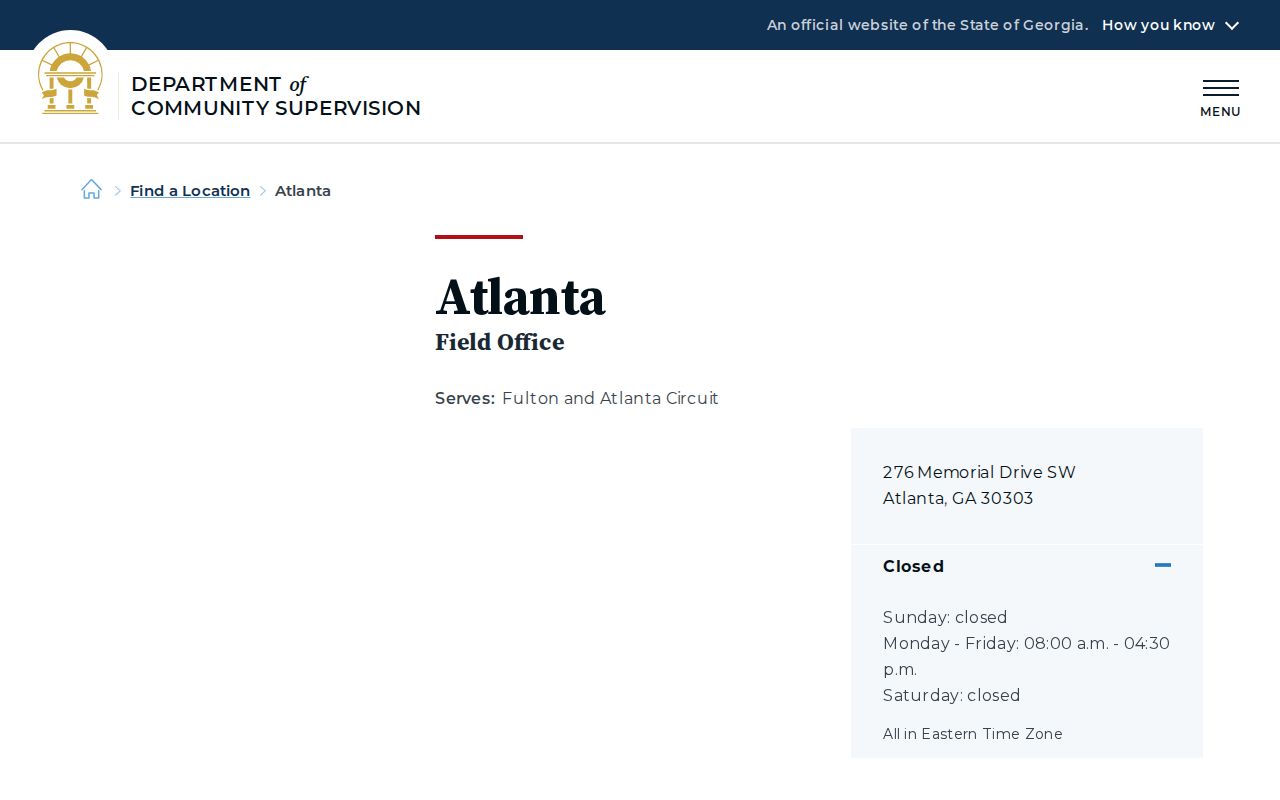
DCS Atlanta Field Office
276 Memorial Drive SW, Atlanta, GA 30303
(404) 463-0410
Monday through Friday, 8:00 a.m. to 4:30 p.m.
Fulton Supervision Violations
An absconder is a supervised person whom the agency reports as failing to maintain required contact or location. That status can lead to a warrant, arrest, and revocation proceedings. It does not erase the prior release. Use official Board, DCS, court, or law-enforcement language and avoid guessing about why a status changed.
VINE concerns custody changes and alerts, not the full terms of parole or probation. If a person returns to custody, VINE may provide a notification channel, while the supervising agency and court record explain the alleged violation and legal result. A wanted or absconder notation should be treated as an active agency matter.
Fulton Supervision Discharge Records
Supervision ends through a formal discharge, sentence completion, court action, or other lawful agency determination. Merely reaching a projected date or disappearing from one search does not prove discharge. Keep the release record, parolee result, court disposition, and any discharge documentation distinct.
Georgia open-records law provides a request channel for existing public records, but agencies need not create a certificate that does not exist. Confidential supervision or offender-file material may also be withheld. Ask narrowly for public confirmation and verify a county release first through the Fulton County release record path when the custody event began in the jail system.
Fulton Supervision Source Order
Use each source for the stage it created. The Fulton release record shows how county custody ended. The court disposition establishes probation. A GDC record establishes the prison stage. The Parole Board records the parole decision, and DCS handles active state community supervision. One source should not be forced to answer another agency’s question.
This order also resolves apparent conflicts. A jail record can correctly show release while DCS correctly shows supervision. A TPM can remain a past review marker while the parolee search reflects actual release. If dates disagree, record when each source was checked and contact the agency responsible for the newest stage.