
Metro Transitional Release Paths
GDC identifies Metro Transitional Center as a minimum-security transitional center serving adult female felons. Its records belong to Georgia's state corrections system. Fulton sheriff searches and county booking data can document a separate county custody episode, but they cannot prove that a person left this GDC center.
Possible departures include parole, maximum-sentence discharge, another authorized release status, or transfer to a different GDC location. Parole releases a person under conditions before the sentence ends. Discharge ends the custodial sentence represented by that record. A transfer continues state custody. Read current status, most recent institution, sentence details, and parole information together before choosing among those outcomes.
Confirm a Metro Center Release
Use GDC Find an Offender as the first public check. A GDC ID is the best search key. If it is unavailable, search by full name and compare age, gender, conviction county, offense, and most recent institution. Confirm that the result actually refers to Metro Transitional Center.
- Find the matching state offender record.
- Review active or inactive status and the most recent institution.
- Compare sentence and release information with the date being researched.
- Check the Parole Board's parolee or tentative parole month tools.
- Ask DCS about community supervision when a release under supervision is shown.
- Use the GDC Open Records Request portal for unresolved public discharge facts.
A tentative parole month can change and is not an actual release date. A facility no longer shown as current may reflect transfer. The Fulton released-inmate guide explains why county and state custody records must remain separate.
Metro Offender Search Fields
The GDC query accepts case number, GDC ID, first and last name, gender, race, age range, most recent institution, primary offense, conviction county, status, and a recent-sentence range. Those filters help reduce mistaken identity. The public result then provides the state corrections context needed for a release check.
| Field | Reason to check it |
|---|---|
| GDC ID | Links to one corrections identity. |
| Status | Helps distinguish an active from inactive record. |
| Most recent institution | Connects the person to Metro Transitional Center. |
| Sentence information | Frames the possible custody end. |
| Parole details | Supports a supervised-release inquiry. |
Inactive does not explain the complete path by itself. Confirm whether the record reflects parole, discharge, or another outcome through the appropriate state office.
Metro Center Records Contact
GDC lists the center at 1303 Constitution Road in Atlanta. Facility staff can route operational questions. For a public release or discharge record, use the GDC open-records portal and provide the GDC ID, full name, date of birth if known, facility, and approximate date. Ask for existing public status, movement, release, discharge, and sentence fields rather than an invented certificate.
Metro Transitional Center
1303 Constitution Road
Atlanta, GA 30316
Phone: (404) 624-2380
Fax: (404) 624-2398
GDC notes that institutional and central-office files are confidential under O.C.G.A. Section 42-5-36. A narrow request for public confirmation respects that limit. Georgia's Open Records Act does not require a new record, and lawful exemptions can restrict what is released.
Metro Transitional Center Profile
The official GDC location page confirms the center's address, contact details, minimum-security role, and population served.
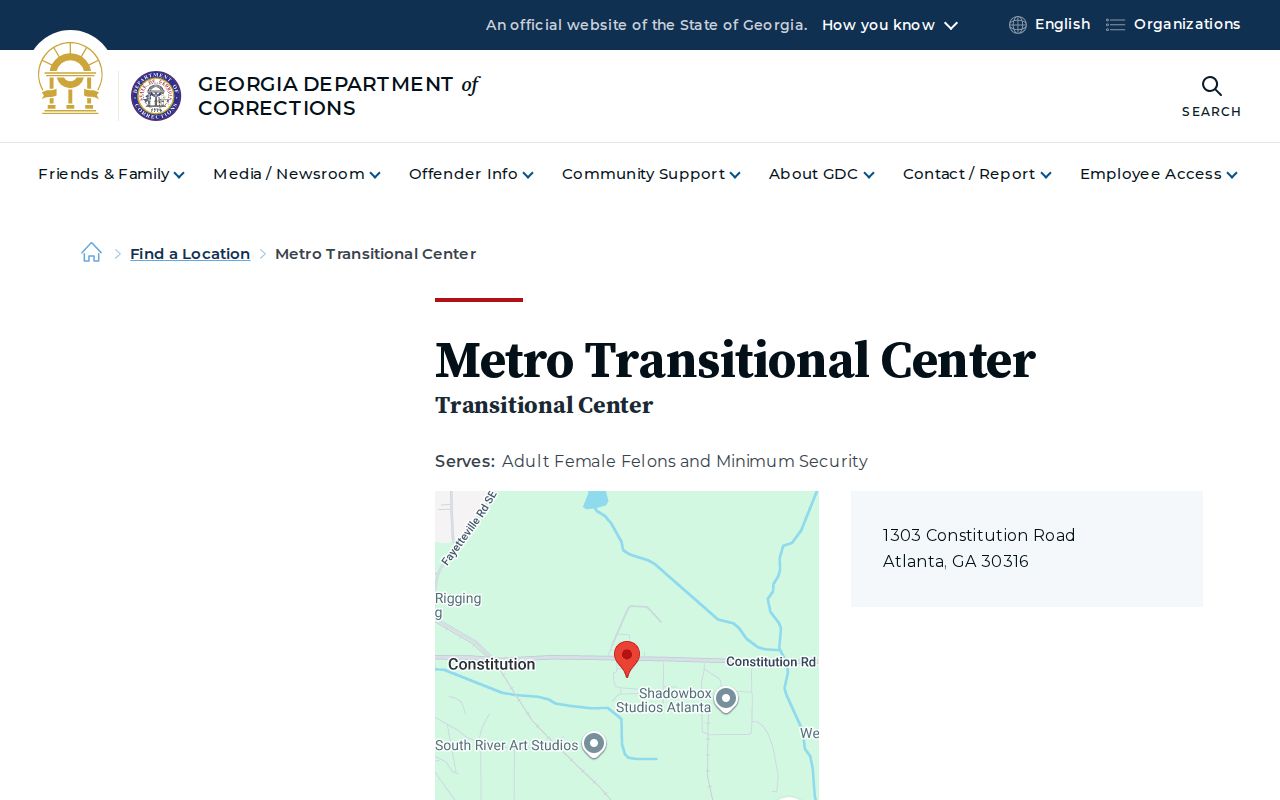
The facility page identifies the institution, while person-specific release proof remains in the offender record, parole information, or a GDC response.
The term transitional describes the center's function, not a completed release. A resident remains within the GDC framework until a lawful release or discharge occurs. Minimum security also does not mean unsupervised community status. These distinctions keep the facility page from being mistaken for a county recent-release list.
Metro Release Supervision Checks
The Georgia State Board of Pardons and Paroles decides parole. Its public tools may show parolee information or a tentative parole month. A TPM is an estimate that may change. The final parole action and actual release status are stronger evidence than the projected month alone.
DCS supervises parole and probation after release. Its Atlanta Field Office serves Fulton and the Atlanta Circuit at 276 Memorial Drive SW, Atlanta, GA 30303. Hours are Monday through Friday, 8:00 a.m. to 4:30 p.m., and the phone is (404) 463-0410. DCS verifies supervision routing when the record supports a supervised release. It does not replace GDC as the source of institutional discharge data.
The DCS reentry resource directory lists navigation resources for people returning to Georgia communities.
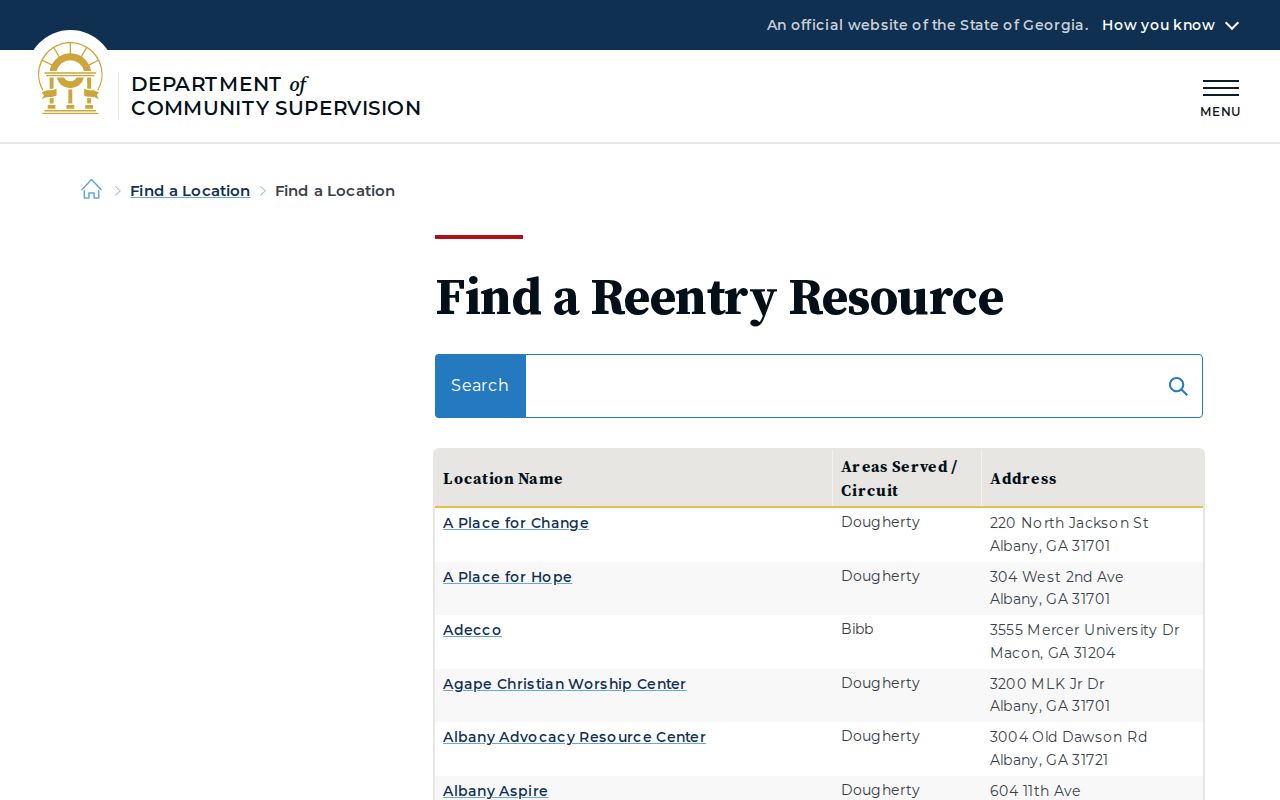
The directory can help with post-release resource contacts, but it is not a custody or release database.
Metro Facility System Boundaries
Fulton County's jail system includes the main jail and named annexes described by DOJ. Metro Transitional Center is not one of those annexes. It is a GDC center located in Fulton County. The correct chain is GDC offender search, Parole Board tools, GDC records, and DCS when supervision applies.
A person can disappear from a county roster because she entered state custody. She can leave Metro for another GDC institution without being released. Court records explain the sentence, but GDC records explain the state custody path. Keeping those systems apart prevents a location change from being reported as a discharge.
Metro Center Federal Release Holds
Some releases involve another authority. When a record names a federal or immigration hold, use BOP or ICE rather than assuming community release. BOP's Inmate Locator covers federal inmates from 1982 onward. ICE has a separate detainee locator and publishes an FCI Atlanta contact for detainee inquiries.
A caller to the ICE facility contact should have the alien registration number and country of birth or enough biographical data. This is a targeted follow-up, not a default search for every Metro resident. The key rule is that release from GDC can end state custody while another lawful custody system continues.
Note: Verify any named detainer with the receiving authority before treating a GDC release as community release.
When no hold is shown, reconcile the actual release date with the parole or discharge basis. GDC owns the institutional record. The Parole Board owns the parole decision, and DCS owns community-supervision routing. The sentencing court remains the source for the judgment and later court orders. Save the GDC ID and date checked when making inquiries. Those details help each office distinguish the correct person and explain why an estimated date, an institutional movement, and a completed release may appear at different times.
Metro Center Release Reconciliation
Release confirmation is strongest when the GDC status, parole action, and DCS supervision start form one timeline. GDC owns the institutional record. The Parole Board owns parole decisions. DCS owns community supervision. The court owns the judgment. Direct a conflict to the office that created the disputed field.
Save the GDC ID, most recent institution, and date of each search. If Metro Transitional Center disappears from the institution field, look for another GDC placement before calling it release. A movement within state corrections can occur while the sentence remains active. An inactive record also needs context because it may reflect discharge or another closed status.
When the public result is thin, ask GDC for existing public movement, release, discharge, and sentence fields. Give enough identity detail to avoid a false match, but do not request confidential institutional material. If parole is shown, compare it with the Board's record and then use DCS only for the supervision phase.
A projected date is not the same as an actual Metro release. The Parole Board may publish a tentative parole month, and GDC sentence calculations may change. Court orders, credits, disciplinary events, and parole action can affect timing. Verify the current record close to the expected date.
Parole and probation should not be merged. The Board grants parole from a prison sentence, while a court orders probation. DCS may supervise either in the community. Discharge describes the end of the relevant custodial sentence. Naming the status correctly makes it clear whether GDC, the Board, DCS, or the court should answer the next question.
Public visibility can also be limited by law. GDC cites confidentiality for institutional and central-office files under O.C.G.A. Section 42-5-36. Georgia open-records law still permits requests for existing public material, subject to exemptions. Ask for narrow release or discharge confirmation rather than a complete confidential file.